What Is Paint Correction — and Does Your Car Actually Need It?
Swirl marks, haze and light scratches explained, plus a simple test to work out whether your paint needs correcting or just cleaning and protecting.
Paint correction is the process of machine-polishing a very small amount of clear coat away to level out the defects sitting in it. That is genuinely all it is — you are not adding shine, you are removing the scratches that were scattering light and hiding the shine that was already there.
What those marks actually are
- Swirl marks: fine circular scratches, usually from automatic car washes or washing with a dirty mitt. The classic spiderweb pattern under direct sun.
- Haze and marring: dulled, cloudy-looking paint from thousands of tiny scratches too small to see individually.
- Etching: pitting from bird droppings, bug remains or hard water that sat too long.
- Oxidation: chalky, faded paint from prolonged UV exposure — extremely common on older Florida cars.
A simple test
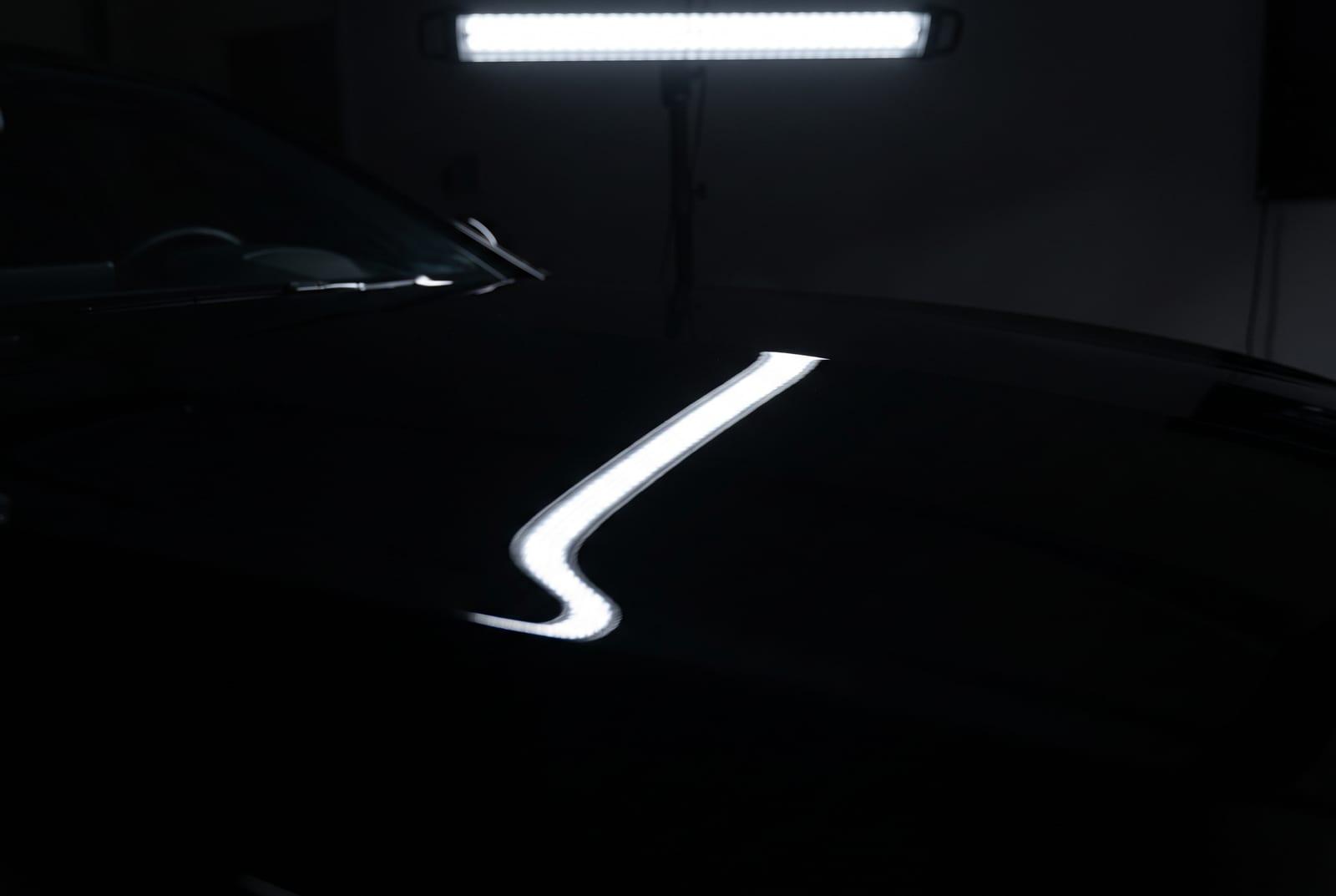
Pull the car into direct sunlight, or shine a phone torch at the paint in a dark garage, and look at the reflection. If the light source reflects as a clean sharp line, your paint is in good shape and just needs cleaning and protecting. If it sits inside a halo of fine circular scratches, that is swirling, and polishing is the only thing that removes it.
Then run a fingernail gently across any individual scratch you can see. If it catches, that scratch is through the clear coat and correction will reduce its visibility but not erase it. If it does not catch, it will almost certainly polish out.
How many stages do you need?
A single-stage correction uses one polishing step and removes roughly 50–60% of defects. That is the right answer for most well-kept daily drivers. A two-stage adds a cutting step first and takes out 80–90%, which is what heavily swirled or oxidised paint needs. More stages than that is show-car territory and most people genuinely do not need it.
Clear coat is finite. Every correction removes a little, so it should be done deliberately — not annually as routine maintenance.
Correction and coating go together
This is the part people get backwards. A ceramic coating seals in the paint underneath it for years, so any swirls present when it goes on are locked in too. Correcting first is what makes a coating worth paying for — which is why a correction stage is built into our coating packages rather than sold separately.
Related services